
The Serengeti is defined by space.
Not just open land, but distance, scale, and time. When you enter the Serengeti, you quickly realise this is not a park you pass through, it is a place you stay in, move slowly within, and learn to read.
The landscape is wide and open, with long horizons and changing light throughout the day. Wildlife moves freely across these plains, following grass, water, and instinct. There are no fixed patterns, and that is exactly what makes the Serengeti special.
Many people expect the Serengeti to feel dramatic all the time. In reality, much of its power comes from quiet moments.
There are times when animals are spread far apart and you drive without stopping for a while. There are other times when everything happens in one place. Both are part of the experience.
This is a park where patience matters. The more time you spend here, the more you begin to notice details, behaviour, movement, and small changes in the landscape that are easy to miss when rushing.
The Serengeti supports a full and balanced ecosystem. Depending on the season and location, sightings may include:
Wildlife encounters here are natural and unforced. Some days are busy, others are quiet. This variation is part of what makes the Serengeti authentic.
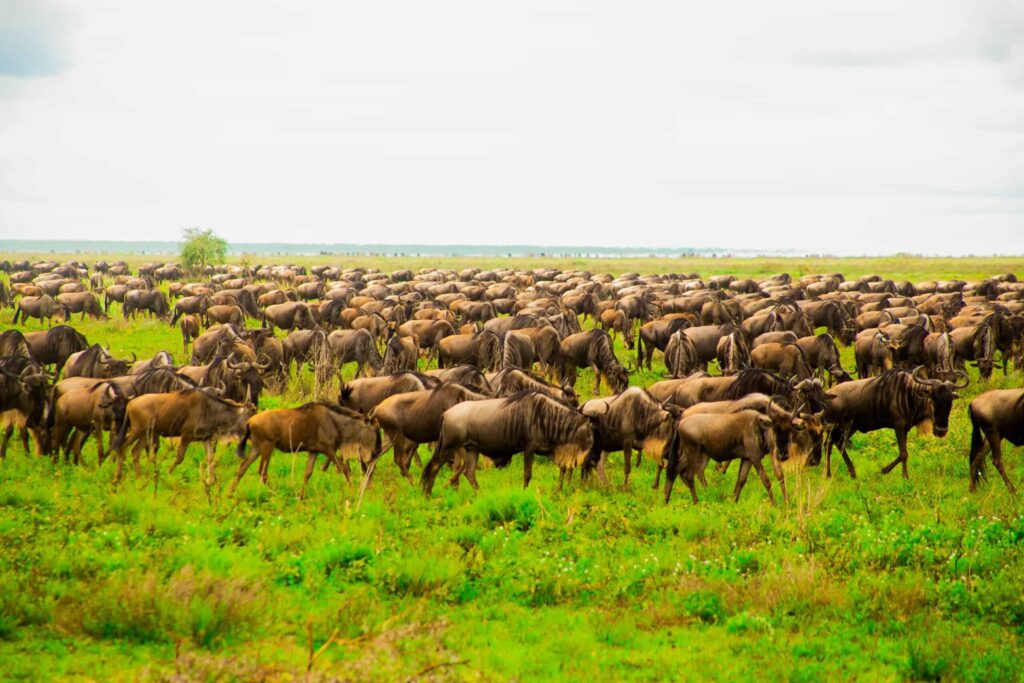
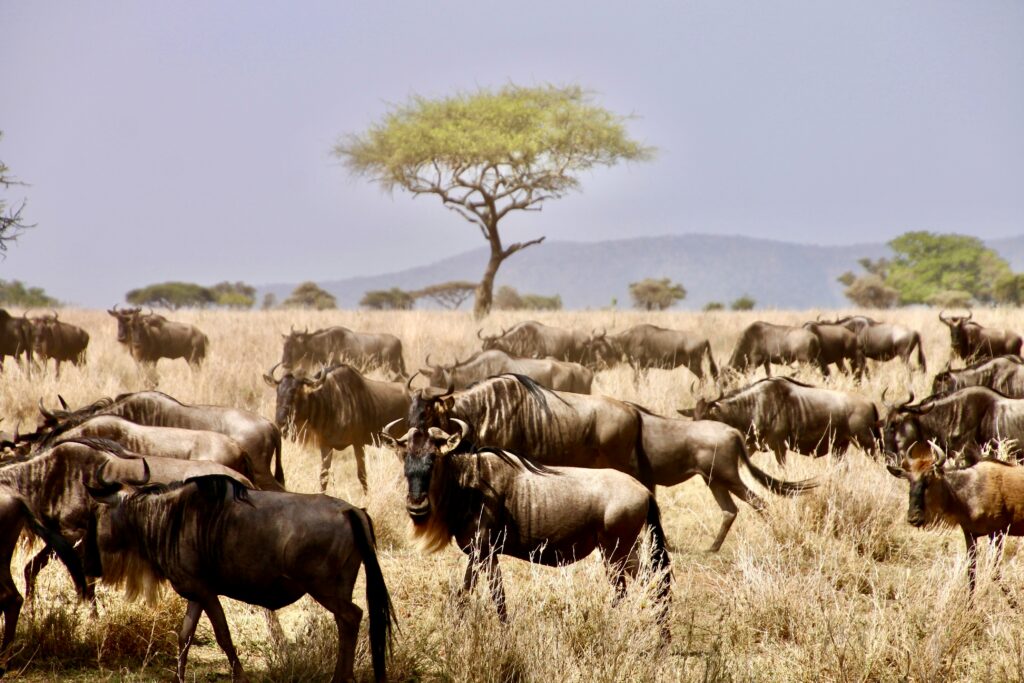
The Great Migration passes through the Serengeti at different times of year, but it is not a single moment or location.
Animals move continuously across the ecosystem, responding to rainfall and grazing conditions. When designing a safari, we consider where the migration is likely to be during your travel dates and position your time in the Serengeti accordingly.
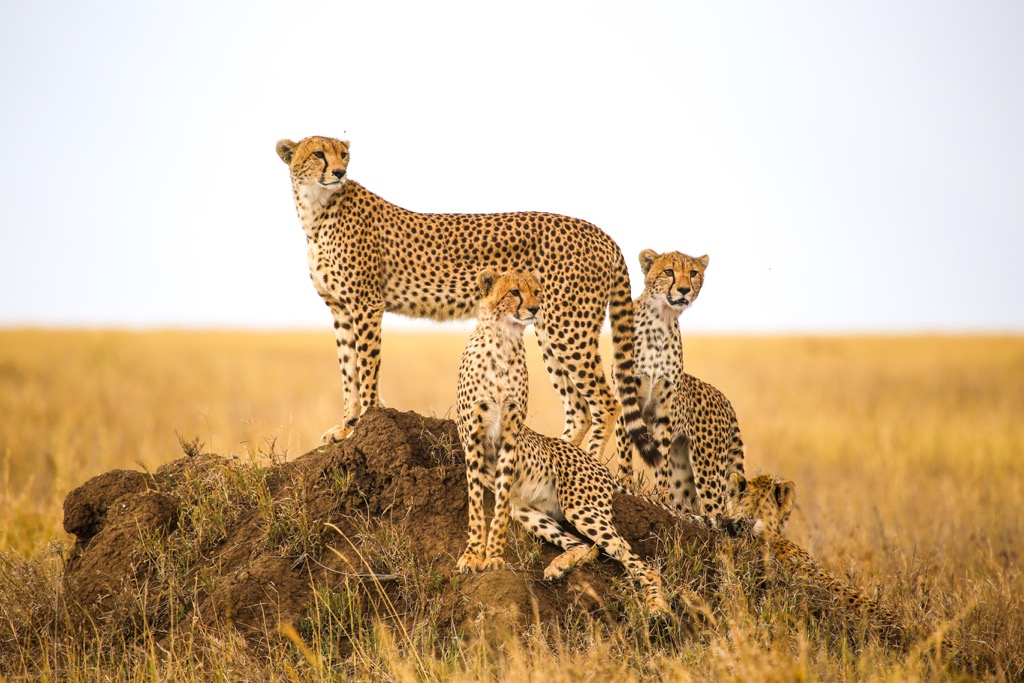
Even outside migration periods, the Serengeti remains one of the best places in Africa for predator sightings and open-landscape game viewing.
The Serengeti is not suited to short visits.
Driving distances are long, and wildlife movement is unpredictable. Staying multiple nights allows flexibility, to follow sightings, return to areas that feel promising, or simply slow the pace of the day.
This is why, in our itineraries, the Serengeti is given proper time rather than treated as a brief stop.
Evenings in the Serengeti are often quiet.
As the sun lowers, the plains change colour and the air cools. Sometimes animals move through the light, sometimes the landscape stands still. These moments are unhurried and simple, and many guests remember them as strongly as any wildlife sighting.
At Safari with Isaac, we experience the Serengeti with a focus on:
Whether you visit as part of our Signature Tanzania Safari or a Tailor-Made Safari Experience, your time in the Serengeti is planned carefully and guided with experience and respect for the land.
The Serengeti can be visited year-round, with each season offering a different experience:
There is no single “best” time, the right time depends on what you want to experience.
The Serengeti rewards travelers who approach it with patience and realistic expectations. It is not about how much you see in one day, but how well the journey flows over time.
If you’re interested in experiencing the Serengeti in a thoughtful, well-paced way, we would be happy to help design that journey with you